
*This post may contain affiliate links for which I earn commissions.*
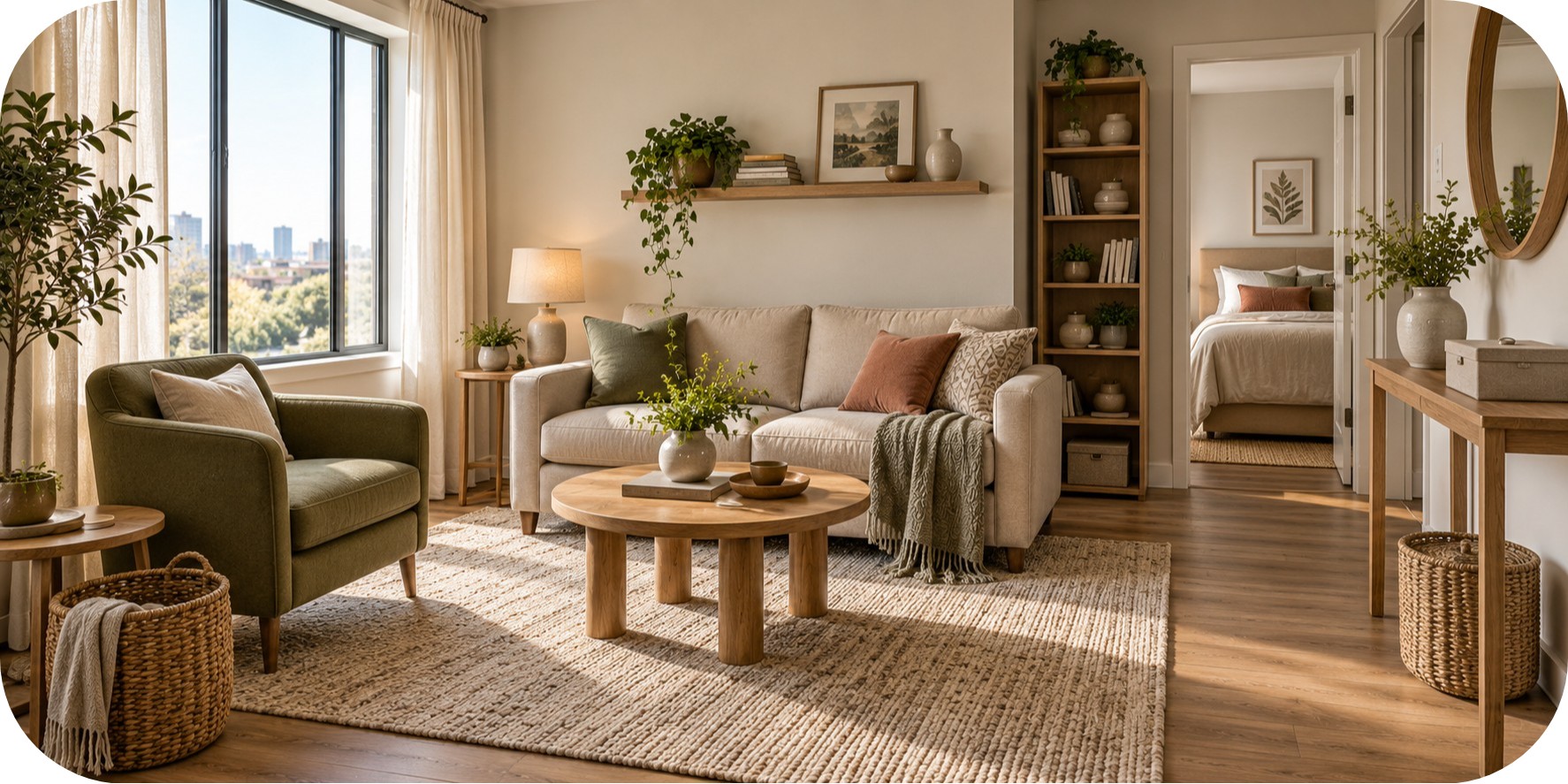
A small home doesn’t need more square footage to feel comfortable. Often, the biggest difference comes from choosing furniture with the right proportions, giving everyday items a proper place, and leaving just enough breathing room for the space to feel calm.
Think soft ivory walls, warm oak, woven textures, a compact sofa that doesn’t swallow the room, and storage that quietly earns its keep. The goal isn’t to make a small home pretend to be large. It’s to make the space you have feel beautiful, useful, and genuinely good to live in.
The Design Direction
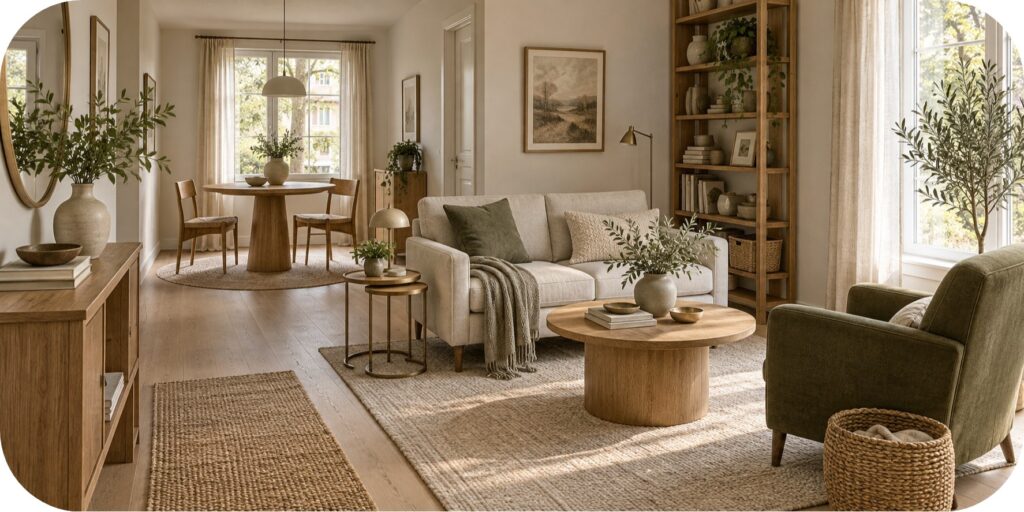
The most inviting small spaces usually have a sense of restraint without feeling sparse. Warm ivory, oatmeal, beige, muted sage, and natural wood create a soft foundation that works especially well in apartments and compact homes.
Texture keeps those quiet colors interesting. Linen curtains, wool rugs, woven baskets, matte ceramics, and visible wood grain add depth without relying on lots of decorative objects.
Furniture shapes should feel visually light and appropriately scaled. Look for raised legs, rounded tables, slim arms, shallow depths, and pieces that leave some floor visible around them.
Natural daylight is another part of the look. Keep windows as open as practical and use soft curtains that filter light rather than blocking it.
A few deeper accents, such as olive green, walnut, terracotta, dusty blue, or charcoal, can give the room definition. One thing I’d resist is filling every empty corner just because it’s there. A little open space is often what makes everything else look intentional.
Why this works: When scale, color, texture, and function are working together, a compact room feels considered rather than crowded.
Visual Ideas to Steal
- Define One Clear Living Zone
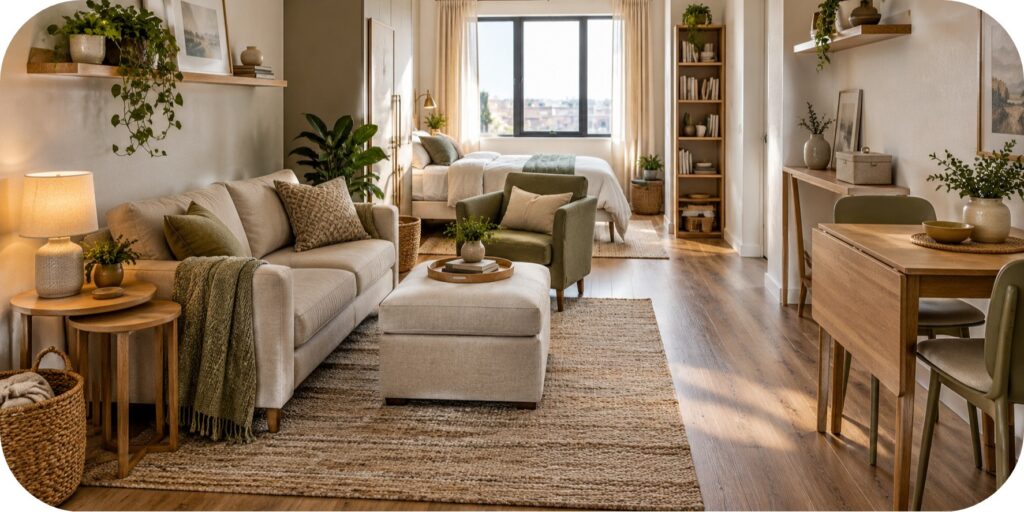
Use an area rug to establish where the living space begins and ends, especially in a studio or open-plan apartment. A compact sofa, petite chair, and round coffee table grouped completely or mostly within the rug creates a visual room without adding walls.
Leave a visible path beside the arrangement so the furniture doesn’t interrupt how you move through the space.
- Choose a Sofa That Fits the Room
A slim loveseat or compact sofa can make a surprisingly big difference. Look for shallow arms, a relatively low back, and legs that lift the body slightly off the floor.
Instead of choosing the biggest sofa that technically fits, allow some space at either end. That small margin keeps the room from feeling packed wall to wall.
- Let One Piece Do Two Jobs
A storage ottoman can work as a footrest, extra seating, hidden storage, and even a casual coffee-table surface with a tray on top.
The same idea applies throughout a small home. A console can double as a narrow desk, a bench can hold baskets underneath, and a folding table can appear only when it’s needed.
- Use Round Shapes in Tight Areas
Round coffee tables and nesting tables are especially useful where circulation is limited. Without sharp corners projecting into a walkway, they often feel easier to move around.
Natural oak or walnut keeps these practical pieces feeling warm rather than utilitarian.
- Take Storage Up the Wall
When floor space is scarce, walls become valuable real estate. A pair of floating shelves, a tall narrow bookcase, or a simple wall-mounted shelf can hold useful items without adding another bulky cabinet.
Keep some areas of the shelves empty. Mixing a few books, baskets, ceramics, and a trailing plant with open space usually looks calmer than packing every inch.
- Create a Small Corner With a Purpose
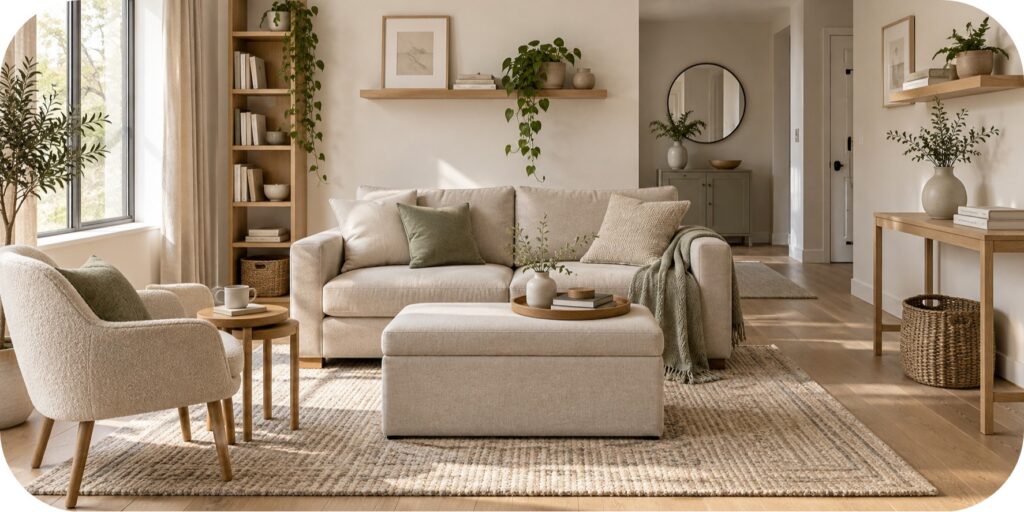
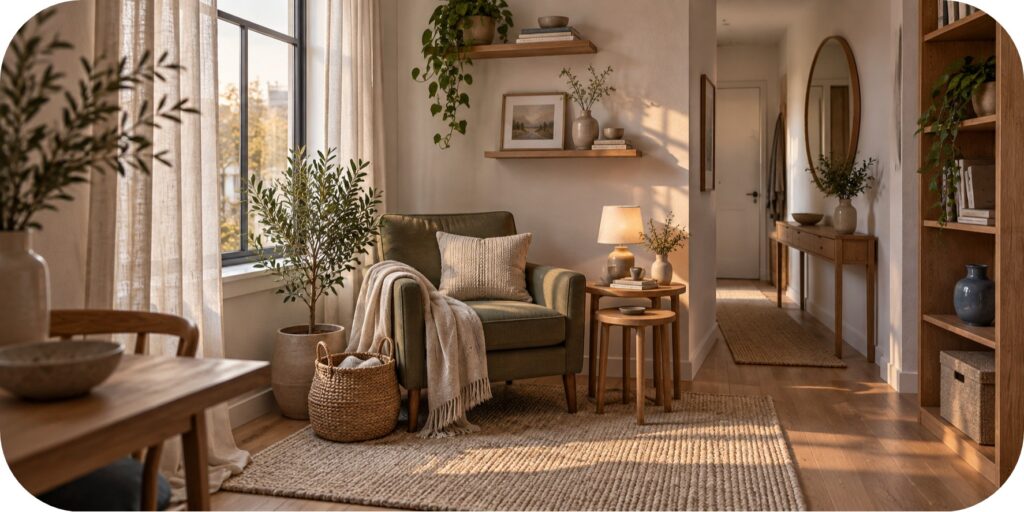
An unused corner can become a reading spot with a compact accent chair, small side table, lamp, and soft throw. A window corner might work as a breakfast spot or occasional laptop area instead.
The key is giving the corner one clear job. Too many functions in one tiny area quickly start to compete with each other.
- Use a Slim Console Where Full-Depth Furniture Won’t Fit
Narrow console tables work well behind a sofa, along a hallway wall, or near an entrance. They provide a surface for a lamp, ceramic bowl, plant, or everyday essentials while using very little floor depth.
Choose a simple open-leg style when you want the room to feel lighter, or a shallow cabinet when concealed storage matters more.
- Repeat Materials to Calm the Room
Small rooms can feel visually busy when every piece introduces a different finish. Repeating natural oak in a coffee table, shelf, and console helps connect separate areas.
The same technique works with fabrics. A muted olive cushion can echo an accent chair, while ivory curtains repeat the warmth of a light sofa or wall color.
- Give Baskets a Real Job
Woven baskets are most useful when they solve an actual storage problem. Keep one beside the sofa for throws, under a console for everyday clutter, or on a shelf for smaller items you don’t want sitting in view.
Natural fibers also soften rooms filled with harder surfaces such as painted walls, metal fixtures, and wood furniture.
- Leave a Little Room Around the Furniture
Small-space decorating sometimes becomes an exercise in fitting as much as possible into the room. The better approach is often the opposite.
A few inches between the sofa and side table, a clear section of wall, or an uncluttered stretch of floor gives the eye somewhere to rest. The room still contains everything it needs, but it doesn’t announce every function at once.
A Few Helpful Picks
When shopping for small-space pieces, proportion matters more than the label “small-space.” Check actual measurements and compare them with your available floor area before buying.
Look for compact sofas with slim arms and shallower seats, storage ottomans with flat or firm tops, and nesting tables that can tuck almost completely together.
For vertical storage, choose wall-mounted shelves that aren’t excessively deep. Around 8 to 12 inches of depth is often enough for books, ceramics, baskets, and useful everyday objects without projecting too far into the room.
Slim consoles and folding tables are most useful when they preserve a comfortable walkway once they’re in place.
Product Suggestions

Click Image To View

Click Image To View

Click Image To View
Make It Feel Intentional
Repeat one wood tone in two or three places rather than introducing several competing finishes.
Keep decorative cushions to a restrained mix of solids and subtle texture.
Use one healthy plant as a stronger focal accent instead of scattering tiny plants everywhere.
Hang curtains close to the ceiling when the proportions allow, letting the fabric fall cleanly toward the floor.
Choose a rug large enough to connect the main seating pieces instead of leaving a tiny rug floating in the center.
Give open shelves some breathing room between objects.
Add one darker accent, such as olive, walnut, or charcoal, to keep a pale neutral room from feeling washed out.
Keep everyday items in attractive baskets, boxes, or closed storage so useful spaces can still feel restful.
Pieces That Pull It Together
A compact sofa is a shorter, shallower seating option designed to provide comfortable everyday seating without dominating the room. Look for slim arms, raised legs, durable upholstery, and dimensions that leave usable space around the piece.
Warm beige, oatmeal, ivory, or muted taupe upholstery fits naturally into a calm small-space palette.
A storage ottoman combines upholstered seating or a footrest with concealed storage inside. Look for a sturdy hinged or removable top, practical interior capacity, and a footprint that still allows easy movement around nearby furniture.
A soft neutral fabric lets it blend into the room instead of looking like another storage container.
Nesting tables are two or more small tables designed to slide beneath each other when not in use. Look for lightweight construction, a modest footprint, and natural wood or simple metal-and-wood combinations.
They add flexible surface space without requiring a permanent large coffee or side table.
A slim console provides a useful surface along a wall, behind a sofa, or near an entrance. Look for narrow depth, clean legs, and enough length to be practical without overwhelming the wall.
Natural oak or walnut gives the piece visual warmth while keeping the profile simple.
Wall-mounted shelves create storage or display space without using valuable floor area. Look for moderate depth, secure mounting, and a finish that coordinates with the room’s other wood or painted surfaces.
Use them sparingly so the wall still has open space around the arrangement.
A folding table provides temporary dining, work, or preparation space that can be reduced when it isn’t needed. Look for a stable mechanism, appropriately scaled tabletop, and enough clearance to open and close it comfortably.
A simple wood finish helps it look like intentional furniture instead of purely functional equipment.
Woven baskets are flexible containers for throws, toys, papers, accessories, or other everyday items. Look for sturdy handles, natural fibers, and sizes that fit underneath consoles, inside shelves, or beside seating.
Their texture brings warmth to neutral rooms while keeping visual clutter contained.
A compact accent chair adds an extra seat without the width or visual weight of a full lounge chair. Look for a relatively narrow frame, supportive seat, raised legs, and upholstery that adds subtle contrast.
Muted olive, warm taupe, dusty blue, or soft textured ivory can introduce color without overpowering a small room.
Product Suggestions

Click Image To View

Click Image To View

Click Image To View
A small-space refresh doesn’t need to start with the whole room. First, identify the area that feels the most crowded. Next, remove or replace one piece that isn’t earning its space. Then add one useful element, such as a properly scaled table, a storage ottoman, or a simple wall shelf, and let the room breathe around it.